




CX-30 vs CX-50
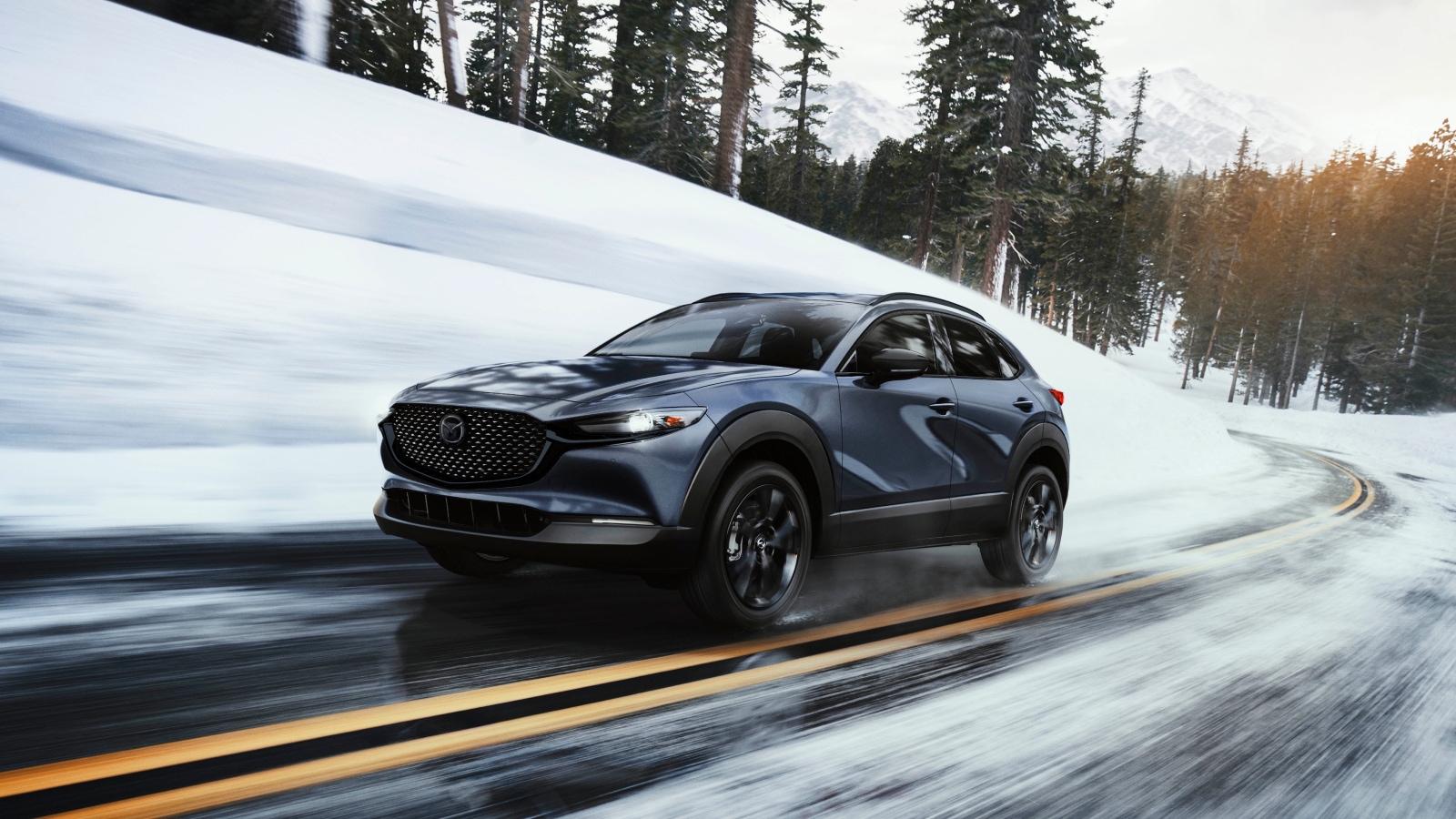
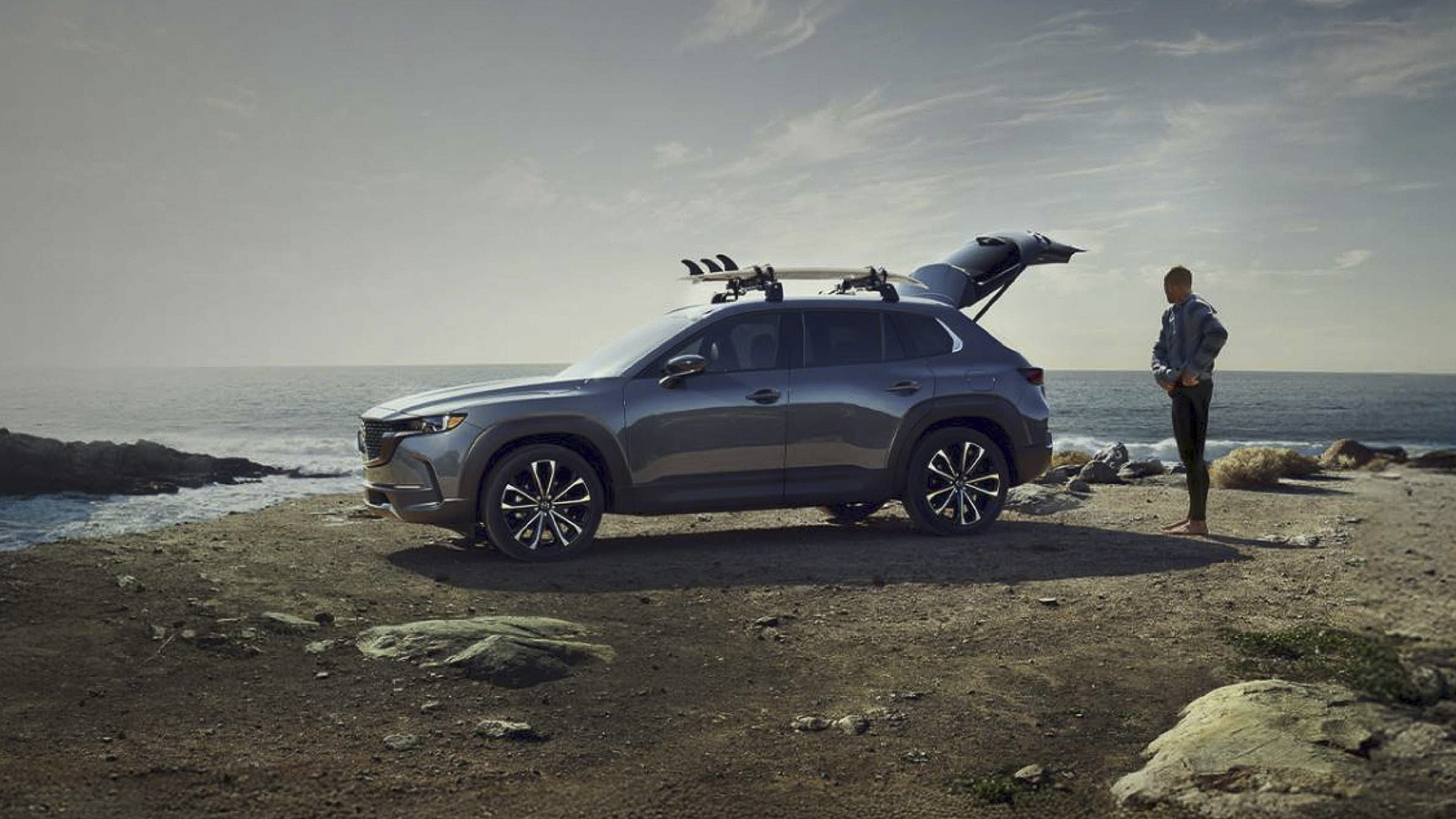
Mazda CX-30 vs CX-50: Which Mazda SUV Fits You in OKC
Deciding between the subcompact Mazda CX-30 and the larger Mazda CX-50? Comparing the Mazda CX-30 vs CX-50 comes down to how much cargo room you need from your Mazda SUV. Both ride on the standard i-Activ all-wheel-drive system, and both offer a naturally aspirated 2.5-liter engine or a turbocharged version. Safety scores match up, too, since each earned a 2026 IIHS Top Safety Pick+ and a 5-Star Overall Safety Rating from NHTSA. The smaller CX-30 starts at a lower price and benefits from a smaller profile, while the CX-50 adds cargo space, ground clearance, and greater presence. In our guide below, we’ll compare the powertrains, cargo room, capability, and trim levels of both. Browse our new Mazda inventory and come drive them back-to-back at Bob Moore Mazda!
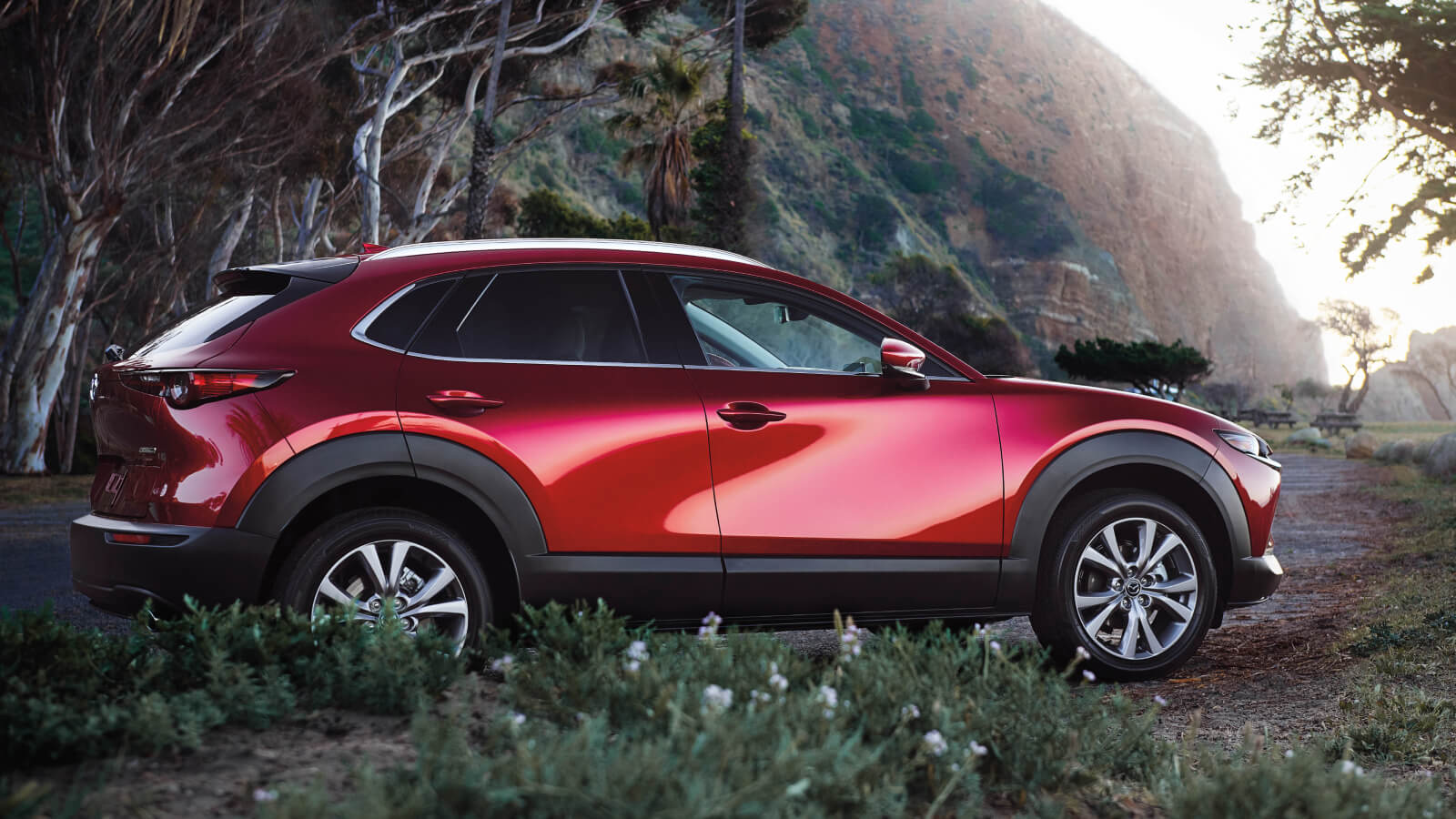
Mazda CX-30 vs CX-50 Performance and Fuel Economy
Both crossovers start with a SKYACTIV-G 2.5-liter four-cylinder. In the CX-30 it makes 186 horsepower and 186 lb-ft of torque, while in the CX-50 it makes 187 horsepower and 185 lb-ft. Those figures land within two horsepower of each other. Turbo power widens the gap slightly. The CX-30’s turbo is rated at 250 horsepower and the CX-50’s twin-scroll turbo at 256, though both make the same 320 lb-ft of torque.
| Powertrain: | Mazda CX-30: | Mazda CX-50: |
| Base horsepower | 186 hp | 187 hp |
| Base torque | 186 lb-ft | 185 lb-ft |
| Base fuel economy | 24 city / 31 hwy / 27 combined | 24 city / 30 hwy / 26 combined |
| Turbo horsepower | 250 hp | 256 hp |
| Turbo torque | 320 lb-ft | 320 lb-ft |
| Turbo fuel economy | 22 city / 30 hwy / 25 combined | 23 city / 29 hwy / 25 combined |
Fuel economy reflects the size difference of the base engine, with the lighter CX-30 holding a small edge on the highway and in combined driving. Turbocharged, the two finish at the same 25 mpg combined, with the CX-50 taking the city number and the CX-30 taking the highway. If most of your miles are Oklahoma City streets, the CX-30 asks a little less at the pump each week. In reality, differences between the powertrains are negligible.
Cargo Space and Passenger Room
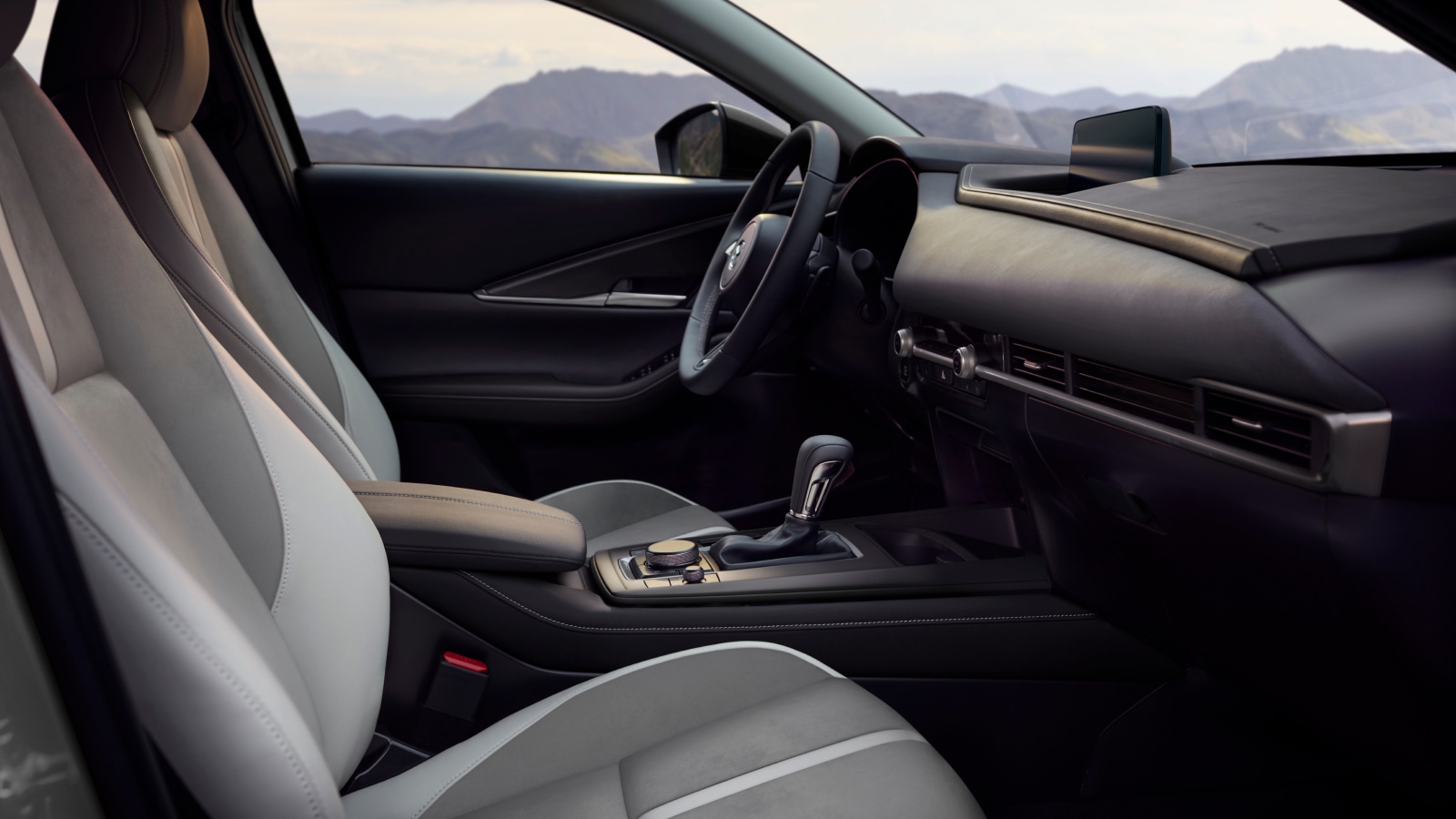
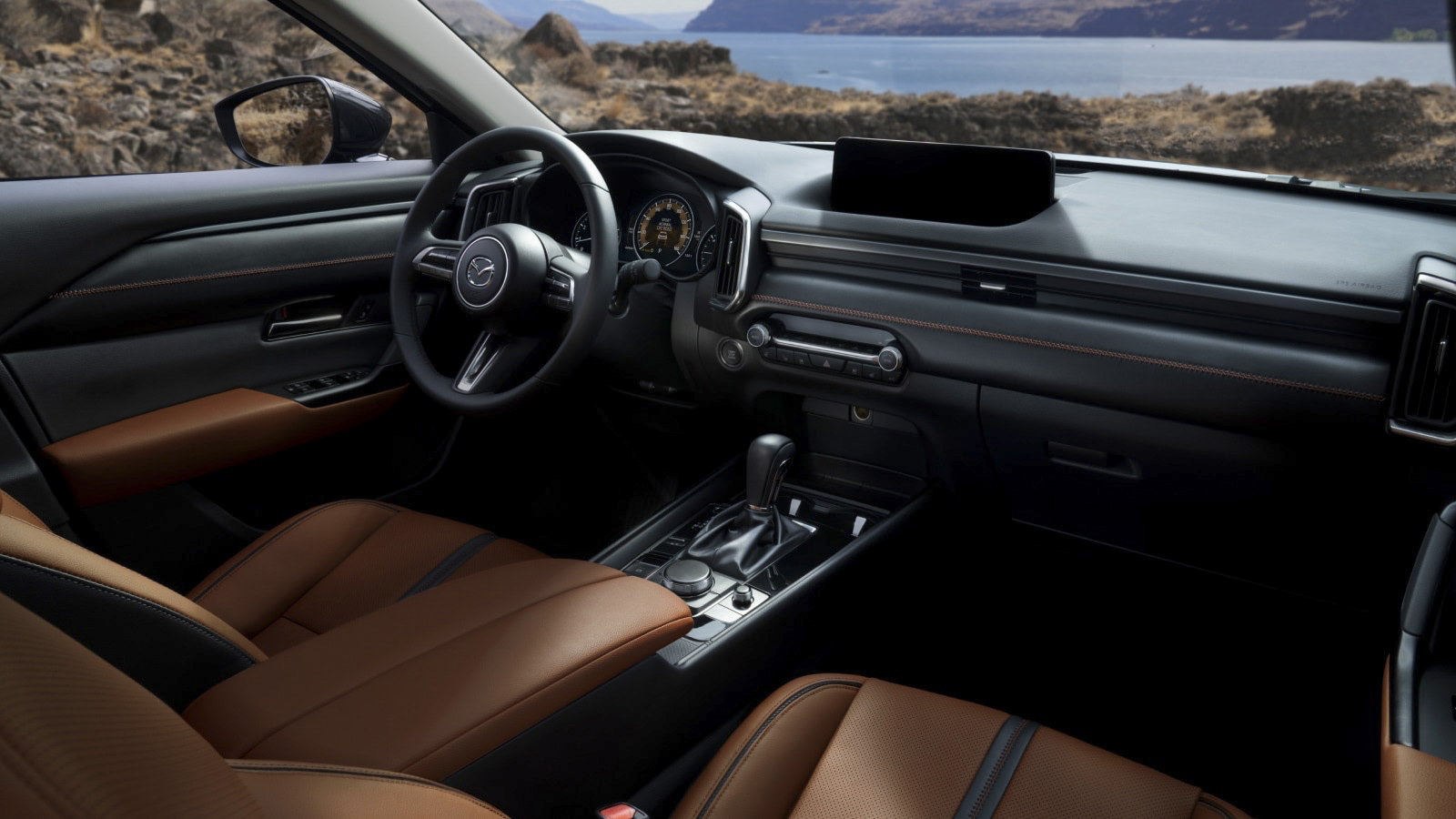
Cargo is where you’ll see the clearest split between the two crossovers. Behind the rear seats, the CX-30 holds 20.2 cubic feet while the CX-50 holds 31.4 cubic feet. Fold those seats down and the numbers grow to 45.2 and 56.3 cubic feet.
| Interior: | Mazda CX-30: | Mazda CX-50: |
| Cargo behind rear seats | 20.2 cu ft | 31.4 cu ft |
| Maximum cargo | 45.2 cu ft | 56.3 cu ft |
| Seating | 5 passengers | 5 passengers |
| Rows | 2 rows | 2 rows |
Both seat five across two rows, so the CX-50’s whole advantage sits behind the second row. Strollers, dog crates, and camping gear are the reason to look at the CX-50 first. If you’re parking in a downtown garage every morning, the CX-30’s tighter footprint is worth more than the cubic feet. Inside the CX-30, a 10.25-inch center display anchors the dash across all trims.
Ground Clearance and Towing Capability
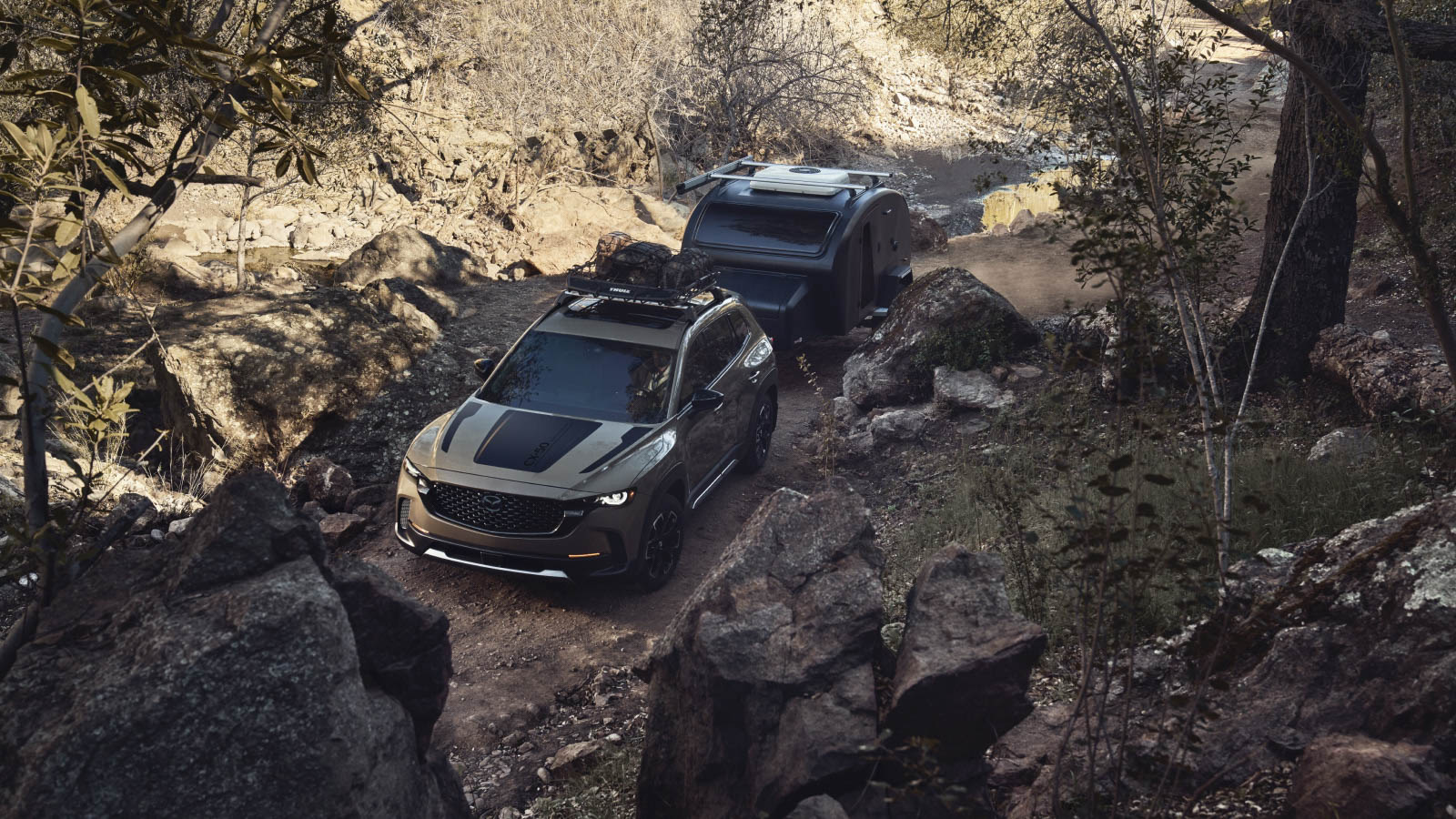
The CX-50 sits 8.3 inches to 8.6 inches off the ground, and it tows up to 2,000 pounds with the base engine. Add the turbo and Towing Mode, and that number climbs to 3,500 pounds. The CX-30 sits 8.0 inches up, and Mazda doesn’t publish a tow rating for it. Both crossovers use the same i-Activ all-wheel-drive hardware.
| Capability: | Mazda CX-30: | Mazda CX-50: |
| Ground clearance | 8.0 in | 8.3 in to 8.6 in |
| Maximum towing | Not published by Mazda | Up to 3,500 lbs |
| Drivetrain | Standard i-Activ AWD | Standard i-Activ AWD |
| Maximum cargo | 45.2 cu ft | 56.3 cu ft |
Pulling a small trailer or a pair of dirt bikes puts the CX-50 ahead, and the extra clearance helps on gravel roads. If you’re staying on pavement, the two behave much the same day-to-day. Ask our team to walk you through the towing package when you visit.
Mazda CX-30 and CX-50 Trim Levels and Pricing
| Lineup: | Mazda CX-30: | Mazda CX-50: |
| Trim levels | 8 trims | 7 trims |
| Starting MSRP | $26,375 | $29,900 |
| Top trim MSRP | $37,900 | $42,900 |
| Maximum cargo | 45.2 cu ft | 56.3 cu ft |
Eight CX-30 trims open at $26,375 and run up to $37,900 for the Turbo Premium Plus at the top of the range. Seven CX-50 trims start at $29,900 and top out at $42,900 for the Turbo Premium Plus. Special editions land in the middle of both lineups, with Aire and Carbon Edition packages on the CX-30 and the Meridian Edition on the CX-50. Mazda positions the CX-30 as an entry point to the brand, while the Mazda CX-50 is positioned as a more premium SUV. Check our current Mazda offers before you shop, and ask about our certified pre-owned selection if you’d rather buy a year or two used.
Which Mazda SUV Belongs in Your Driveway?
Both crossovers earn the same safety awards, run the same all-wheel-drive system, and offer the same choice between naturally aspirated and turbocharged power. We think they’re both great SUVs, but we’d choose the CX-50 if you need some extra cargo room, and the CX-30 if you’re looking for a more affordable Mazda SUV. Come test-drive the Mazda CX-30 and CX-50 back-to-back at Bob Moore Mazda today!